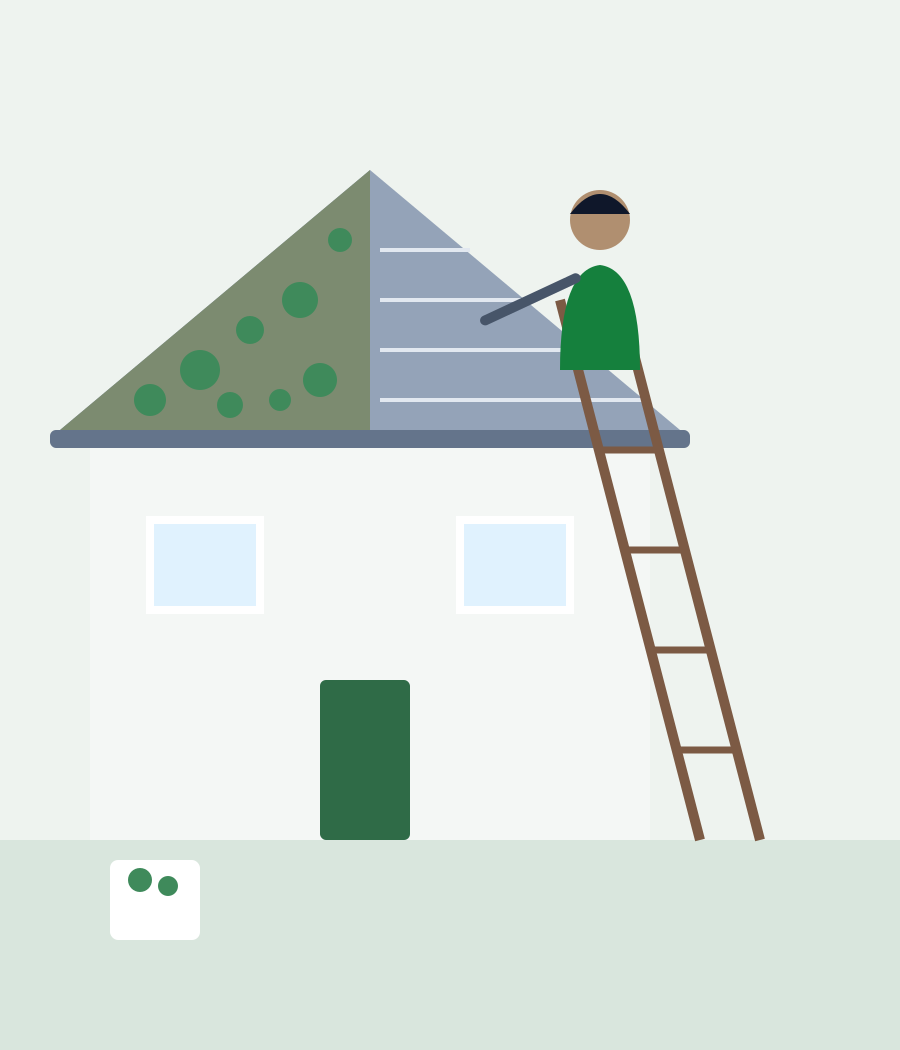
Moss on a roof is one of those problems homeowners put off for years. Then a gutter overflows, clumps start landing on the patio, or an estate agent mentions that the roof looks tired, and suddenly they want it sorted. A roof cleaning business meets that need: careful removal of moss, lichen and algae, a clean set of gutters afterwards and, often, a treatment to slow the growth coming back.
It is a trade with low barriers to entry, which is both its appeal and its problem. Anyone can buy a ladder and print leaflets, and roof cleaning has attracted more than its share of door-knockers and poor workmanship. The businesses that do well are the ones that take safety, method and honesty seriously, and make that obvious to customers before anyone climbs onto a roof.
This guide covers the work, the legal set-up, safety and chemicals, start-up costs, pricing and winning your first customers.
Key points
- Roof cleaning is mainly moss and algae removal, gutter clearing and follow-up biocide treatments for homeowners, landlords and small commercial sites.
- Working at height is the biggest risk in the job, so plan access properly and follow the Work at Height Regulations 2005.
- Use only authorised biocide products, follow the label exactly and keep run-off away from drains, ponds and plants.
- Expect to spend a few thousand pounds on access kit, tools, insurance and a van, more if you buy a powered access platform.
- Trust wins jobs: show real before-and-after photos, explain your method and make your business easy to check.
- A strong Google Business Profile, a clear website and consistent details help you appear in local search and in AI answers.
In this guide
- What a roof cleaning business actually does
- Setting up a roof cleaning business legally
- Working at height safely
- Biocides, chemicals and run-off
- Insurance
- What it costs to start
- Pricing roof cleaning work
- Winning the first roof cleaning jobs
- Local SEO: being found when homeowners search
- AI search: when homeowners ask an assistant about moss
- Frequently asked questions
- Next steps
What a roof cleaning business actually does
The core job is removing moss and organic growth from pitched roofs. On most UK houses that means concrete or clay tiles, with slate common in older properties and some regions. Moss holds water against the tiles, lifts edges, blocks gutters and, in cold weather, can make frost damage worse. Lichen and black algae are mainly cosmetic but matter to people selling or improving a house.
A typical job includes:
- Checking the roof type, condition and access before quoting.
- Protecting the ground, conservatories, plants and paths.
- Removing moss by hand with scrapers and brushes, or with a rotary or low-pressure method suited to the tiles.
- Clearing debris from gutters and downpipes and bagging it.
- Applying a biocide treatment, where the customer wants one, to kill remaining spores and slow regrowth.
- Photographing the finished roof and reporting any problems you saw, such as slipped tiles or cracked ridge mortar.
Common add-ons include fascia and soffit washing, conservatory roofs and solar panels. Roof coatings are a separate specialism that some surveyors are wary of, so build a cleaning reputation first.
Choosing your methods
How you remove the moss matters more than anything else, because the wrong method can damage the roof. High-pressure jetting can erode the surface of concrete tiles, force water under laps and dislodge older tiles, which is why many careful firms avoid it on domestic roofs or use it only at low pressure on suitable surfaces. Hand scraping is slower but gentle. Soft washing, where a cleaning solution is applied at low pressure and left to work, suits algae and lichen better than thick moss. Whatever you choose, be ready to explain it in plain English.
Setting up a roof cleaning business legally
Most roof cleaners start as sole traders, which is simple: you register for Self Assessment with HMRC, keep records of income and expenses, and pay tax and National Insurance on your profits. A limited company can make sense once profits grow or if you take on staff, but it brings more administration. An accountant can help you decide.
Other basics:
- Keep business money in its own bank account and register for VAT if turnover passes the threshold.
- If you sign up homeowners at their door or in their home, the Consumer Contracts Regulations normally give them a 14-day cancellation period, and you must tell them about it in writing. Get written consent before starting work inside that period.
- Put clear terms on every quote: what is included, how you handle damage you discover, payment terms and what happens if weather delays the job.
Moss, debris and waste carrier registration
You will be taking bags of moss and gutter debris away from customers’ homes. Businesses that transport waste generally need to register as a waste carrier with the Environment Agency in England, or the equivalent body in Scotland, Wales and Northern Ireland. Registration is usually free if you only carry waste you produce yourself; otherwise there is a fee and a renewal every three years. The gov.uk waste carrier registration page explains the process, and you will be told which tier applies when you register. Dispose of waste at licensed sites and keep your waste transfer notes.
Working at height safely
Roof cleaning is work at height, and falls from ladders and roofs are among the most serious causes of injury in the building trades. The Work at Height Regulations 2005 require you to avoid working at height where you can, use the right equipment where you cannot, and plan every job so that the risk of a fall is minimised.
In practice:
- Assess access on every quote. Where can a ladder stand safely? Is there room for a tower or a powered access platform? Are there conservatories, greenhouses or power lines in the way?
- Choose the safest practical equipment. Many firms use roof ladders, scaffold towers, edge protection or a mobile elevating work platform rather than walking on a roof.
- Train properly. Courses in ladder safety, working at height and operating powered access equipment are widely available and help with insurance.
- Never work alone on a roof, and keep your risk assessments and method statements written down. Commercial clients will ask for them.
Fragile and asbestos cement roofs
Older garages, sheds and outbuildings often have asbestos cement sheet roofs. These are fragile and cannot bear weight. HSE’s guidance sheet on cleaning weathered asbestos cement roofing says growth should be removed gently, the surface kept wet, and that high-pressure jetting is only appropriate in exceptional circumstances by a specialist contractor. Unless you have the right training and kit, the safest answer is to decline those jobs or refer them on.
Tip
Ask what the roof is made of before you quote, and photograph it. Many accidents and disputes start with a roof that turned out to be more fragile, older or more slippery than expected.
Biocides, chemicals and run-off
Moss killers and algae treatments are biocidal products, and their use is regulated. HSE explains that only authorised or approved products can carry an authorisation number, that products meant for professional users must not be used by the public, and that every user must follow the label. The label tells you what the product is approved for, the protective equipment needed, application rates and environmental precautions.
Practical points:
- Buy treatments from reputable suppliers and check they are authorised for the use you intend.
- Carry out a COSHH assessment for every chemical you use, and keep safety data sheets in the van.
- Protect plants, ponds and pets, and avoid spraying in wind or before rain.
- Keep run-off and debris out of surface water drains, which often lead straight to streams and rivers.
- Do not make claims about treatments that the label or the evidence does not support.
Wildlife on roofs
Birds nest under tiles and in gutters, and bats roost in roof spaces and behind fascias. Under the Wildlife and Countryside Act 1981 it is an offence to intentionally damage or destroy a wild bird’s nest while it is being built or in use, and bats and their roosts have strong legal protection all year. If you find signs of nesting birds or bats, stop work in that area and come back later or seek advice.
Insurance
Public liability insurance is essential: you are working above people’s homes, cars and conservatories, and one dropped tile or splash of chemical could be costly. Make sure the policy explicitly covers working at height and roof work, because some general cleaning policies exclude it. Once you take on staff, employers’ liability cover becomes compulsory too. Tools cover, personal accident cover and proper van insurance are also worth having.
What it costs to start
Costs vary widely depending on whether you buy new or used equipment and whether you invest in powered access. These are rough guides only and will vary by supplier and area.
| Item | Typical cost | Notes |
|---|---|---|
| Ladders, roof ladders and stand-offs | £500–£1,500 | Buy from a recognised standard, not the cheapest option |
| Hand tools, scrapers, brushes and bags | £200–£600 | Cheap to start, replaced often |
| Gutter vacuum system | £1,000–£3,000 | Useful for clearing gutters from the ground |
| Low-pressure spraying kit for biocides | £300–£1,500 | Pump sprayer or small soft wash unit |
| Pole camera or inspection camera | £300–£1,500 | Lets you show customers their roof |
| Used van and racking | £6,000–£15,000 | Signwriting helps local recognition |
| Insurance (first year) | Several hundred pounds upwards | Depends on cover and roof work |
| Powered access hire or purchase | Varies widely | Hire by the day until work justifies buying |
If you use a drone to inspect roofs, follow the Civil Aviation Authority’s drone rules, which include registration and identification requirements, and check that your insurance covers it.
Pricing roof cleaning work
Most roof cleaners price by the job rather than by the hour. The main factors are:
- the size and pitch of the roof;
- how heavy the moss is;
- the access needed and whether you need a tower or platform;
- conservatories, extensions and porches to protect or work around;
- whether gutter clearing and a biocide treatment are included;
- waste volumes and disposal costs.
Cost every job properly, including fuel, disposal, treatments, insurance and a fair wage for travel and quoting time, then add profit. Undercutting leaflet operators is not a plan; explaining why your method protects the roof is.
Simple packages help customers choose: a clean and gutter clear, a clean with a biocide treatment, or a clean plus a booked follow-up treatment.
Moss is most visible in autumn and winter, which is when many enquiries arrive, but short days and frost limit how many roofs you can do. Spring and summer suit treatments, gutter work and soft washing, so plan your diary around both.
Winning the first roof cleaning jobs
Roof cleaning has a trust problem, and your first customers need to feel safe choosing you. Some practical ways to start:
- Start with people who know you. Friends, family and neighbours can give you your first photographed jobs and reviews.
- Approach related trades. Roofers, gutter cleaners, window cleaners and builders often get asked about moss and may prefer to pass it on.
- Talk to letting agents and landlords. Rental properties need maintaining, and agents value reliable contractors who send photos.
- Show your work locally. A clean, signwritten van parked outside a job and a polite note to neighbours can lead to more work on the same street.
- Avoid cold-calling. Knocking on doors to point out moss is exactly what homeowners have been warned about. Let customers come to you.
Photograph every roof before and after from the same angles.
Local SEO: being found when homeowners search
When someone decides their roof needs cleaning, they usually search on their phone for terms such as “roof cleaning near me”, “moss removal [town]” or “roof and gutter cleaning”. The businesses shown on the map at the top of those results get most of the calls, so local SEO matters from the very start.
Google Business Profile
Claim and verify a Google Business Profile, then choose the most accurate primary category you can and add relevant secondary ones. If you work from home and do not want customers visiting, set a service area and hide your address. Add each service with a short description, upload before-and-after photos regularly and answer the common questions customers ask.
In our local search study, 39% of businesses ranked 4th to 15th on Google Maps had fewer than ten photos on their Google profile.
Reviews
Ask every happy customer for a review, ideally with a direct link sent the same day. Reviews that mention the method, tidiness and communication help future customers far more than a row of stars. Answer each one, critical ones included, calmly and briefly.
Consistent details
Use exactly the same business name, phone number and address on your website, your Google profile, trade directories and review sites. Inconsistent details confuse customers and make it harder for search engines to trust your business information.
A website that explains your method
Give each main service its own page, explain how you work and why you avoid damaging methods, add a before-and-after gallery and create pages for your main towns with genuinely local content. Show your insurance, training and real photos of you and your van.
Local links and mentions
Mentions on community sites or a local club you sponsor show you are a real business in the area. If you would rather have specialists handle this, specialist SEO for roof cleaning companies covers your profile, listings, content and links each month.
AI search: when homeowners ask an assistant about moss
A growing number of people ask AI tools rather than typing a search. They might ask ChatGPT “is it safe to pressure wash my roof?”, ask Gemini “how much does roof moss removal cost in the UK?”, or ask Copilot or Perplexity “who removes moss from roofs near Reading?”. Google also shows AI Overviews above many searches, and AI Mode has been available in the UK since July 2025.
Nobody outside these companies knows exactly how their tools choose which businesses to mention, but they tend to draw on information that is clear, consistent and backed up in several places. Sensible good practice:
- Answer real questions on your website, such as pressure washing versus hand removal, how long a clean lasts and what a biocide treatment does.
- Keep your details identical on your profile, website and directories so AI tools can connect them.
- Earn detailed reviews that mention moss removal, the town and the care taken.
- Get mentioned on reputable local sites, such as community groups and trade partners’ websites.
AI products change quickly, and some features launch in the US before the UK, so concentrate on basics that help every platform.
Frequently asked questions
Do I need a licence to start a roof cleaning business?
There is no specific licence for roof cleaning in the UK. You do need to register with HMRC, follow health and safety law including the Work at Height Regulations, use biocides in line with their labels and, in most cases, register as a waste carrier. Check with your local council if you plan to store equipment or chemicals at home.
Is pressure washing a roof a bad idea?
High pressure can damage some tiles and force water where it should not go, which is why many roof cleaners prefer hand removal or low-pressure methods. The right approach depends on the roof material and condition, so assess each roof individually and explain your choice to the customer.
How often do roofs need cleaning?
It depends on the roof, nearby trees, shade and how damp the area is. Some roofs need attention every few years, others much less often. A biocide treatment can slow regrowth, but no honest firm can promise moss will never return.
How long does local SEO take for a new roof cleaner?
Setting up your Google profile and listings properly can make a difference within a few weeks. For most businesses, clear progress in map visibility and enquiries takes two to three months, and longer in very competitive areas. Regular photos, reviews and helpful content keep that progress going.
Next steps
Start by deciding which methods you will offer and learning them properly, then sort your insurance, waste carrier registration and access equipment. Price every job on real costs, photograph everything and ask every customer for a review. Build a Google profile and website that explain your method clearly, and the homeowners who are most careful about who they let near their roof will be the ones who choose you.