An independent pet shop sits in an awkward spot. Dry food can be ordered online on a subscription, and the superstores have bigger car parks and longer hours. Yet much of what pet owners need cannot be bought well from a website: healthy livestock, frozen raw food, livefood, a water test when the fish are gasping, and someone who has kept the animal they are asking about.
This guide is for owners of established pet shops, aquatic centres, reptile specialists and raw food suppliers in the UK, as things stand in October 2026. It covers licensing and welfare standards, the rules on invasive species, raw food handling, loyalty and delivery, how to compete with online retailers, and how local search and AI assistants now shape where pet owners shop.
Key points
- If you sell animals as pets in the course of a business, you need a council licence; in England you also get a one to five star rating that customers can see.
- Wales and Scotland have their own 2021 licensing regulations for pet sellers, so check the rules for the nation you trade in.
- Many invasive non-native plants and animals, including several common pond plants and all slider terrapins, cannot be kept or sold by businesses.
- Raw pet food brings frequent repeat visits but needs careful storage, labelling and hygiene advice for customers.
- Your advantages over online retailers are livestock, expertise, local delivery and loyalty, so build the business around them.
- Pet owners check Google Maps, product availability and AI assistants before they visit, so accurate listings and clear content matter as much as stock.
In this guide
- Understand where your money comes from
- Get licensing and welfare right
- Use trade memberships and qualifications as trust signals
- Stay on the right side of invasive species rules
- Handle raw pet food properly
- Compete with online retailers on your strengths
- Build loyalty and repeat purchases
- Local SEO: how pet owners find you
- AI search: how pet owners ask for recommendations
- Frequently asked questions
- Final thoughts
Understand where your money comes from
A pet shop is several businesses under one roof, each with different margins and competition. Look at them separately.
| Income stream | Typical pattern | Why it matters |
|---|---|---|
| Dry and wet pet food | Every few weeks, year-round | Steady footfall, but under heavy online price pressure |
| Frozen raw food | Weekly or fortnightly | Loyal customers who value a local supplier |
| Tropical and coldwater fish | Steady, with peaks after new set-ups | Higher margins and a reason to visit in person |
| Pond fish, plants and equipment | Strong in spring and summer | High-value baskets during a short season |
| Reptiles, small animals and livefood | Year-round, specialist | Livefood brings customers back every week or two |
| Aquarium and pond maintenance | Monthly contracts | Predictable income that smooths out quiet months |
Track how many customers buy food from you at least monthly, how many livestock buyers return within a month and where new customers heard of you. These say more about the shop’s health than turnover.
Get licensing and welfare right
Licensing is not just a legal box to tick. For many customers it is a sign that you take welfare seriously.
England
In England, selling animals as pets is a licensable activity under the Animal Welfare (Licensing of Activities Involving Animals) (England) Regulations 2018. If you sell animals as pets in the course of a business, including fish, you need a licence from your local council. The council inspects against detailed conditions covering housing, feeding, health, records, staff training and information for buyers.
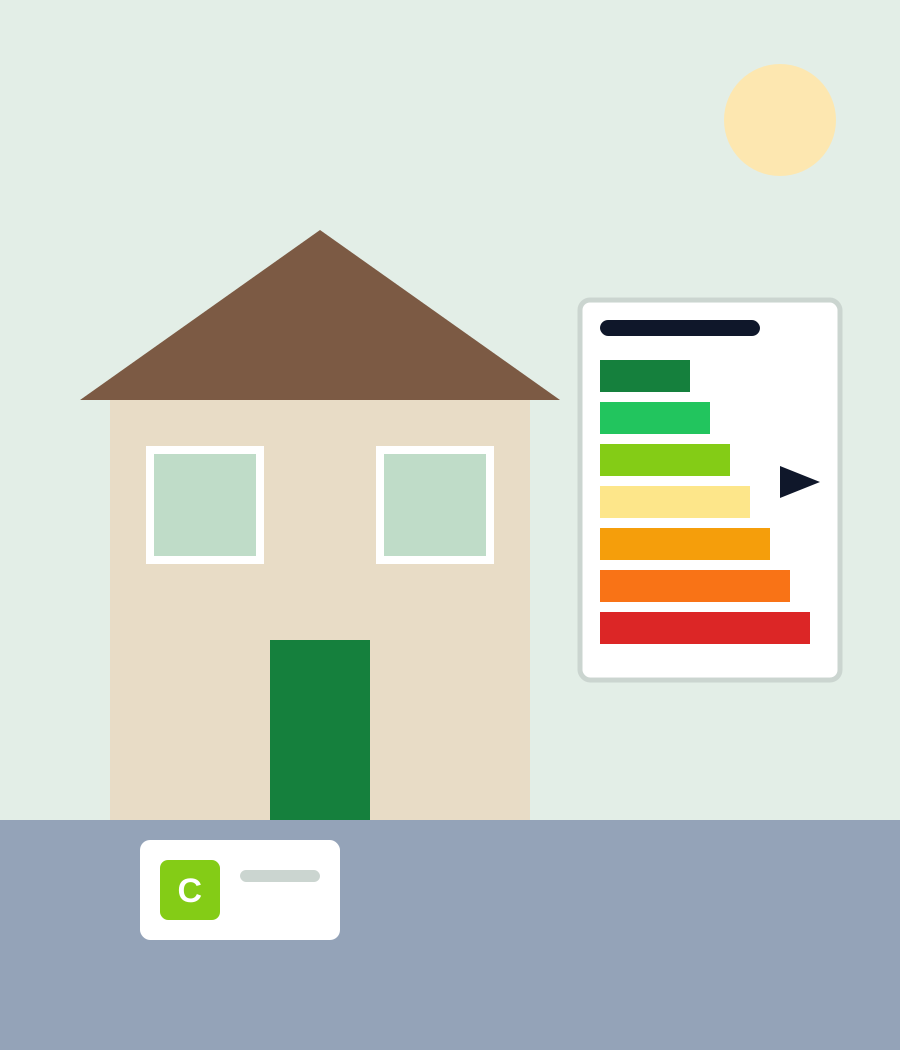
Each licensed business receives a star rating from one to five. The rating reflects how the council assesses your risk and whether you meet only the minimum standards or the higher standards in the official guidance. Higher ratings usually mean a longer licence, of up to three years, and fewer inspections. The licence must be displayed at your premises, and the rating is public.
A few conditions catch owners out:
- Any advert for an animal for sale to the public must include your licence number and the name of the council that issued it, a recognisable photo of the animal, its age (not required for fish), and its country of residence and origin.
- Buyers must be given care information covering feeding, housing, handling, life expectancy and veterinary care.
- You must keep a register of animals, including their supplier and dates of sale or death, for at least three years.
- Staff must be able to recognise welfare problems, backed by a written training policy reviewed every year.
- Puppies, kittens, ferrets and rabbits under eight weeks old cannot be sold, and licensed sellers cannot sell puppies or kittens they did not breed themselves.
It is also an offence under the Animal Welfare Act 2006 to sell an animal to anyone under 16, so train staff to ask when they are unsure.
Wales and Scotland
Wales and Scotland each have their own licensing regulations for pet sellers, both introduced in 2021. In Wales, the Animal Welfare (Licensing of Activities Involving Animals) (Wales) Regulations 2021 replaced the old Pet Animals Act 1951 licence. In Scotland, the equivalent Scottish regulations of 2021 require a licence for anyone selling animals as pets in the course of a business. The detailed conditions differ from England, so read your council’s guidance rather than an English checklist.
Tip
Aiming for a higher star rating? Ask your inspector which higher standards you are closest to meeting. Written procedures or a qualified member of staff can make a real difference.
Use trade memberships and qualifications as trust signals
Two trade bodies matter most for independent pet and aquatic retailers.
- The Ornamental Aquatic Trade Association (OATA) represents the ornamental fish industry. Members sign a code of conduct and get access to training courses, legal and health and safety support, and a public directory that helps customers find their nearest OATA retailer.
- The Pet Industry Federation (PIF) is a trade body for UK pet businesses across retail, grooming, boarding and other services, offering business support, legal advice and industry events.
Membership is not compulsory, but it gives customers and AI tools an independent signal that you are a serious business. Show memberships, staff qualifications and specialist experience, such as marine fish, koi or particular reptiles, on your website, Google profile and in the shop.
Stay on the right side of invasive species rules
This is an area where well-meaning shops can get into trouble, particularly with pond plants and older livestock lines.
Under the invasive alien species rules, a list of plants and animals of “special concern” must not be imported, kept, bred, transported, sold or allowed to spread into the wild. According to the government guidance on invasive non-native plants, the list includes several plants once common in the aquatic trade, such as water hyacinth, fanwort (Cabomba caroliniana), curly waterweed, parrot’s feather, floating pennywort, water primrose and salvinia moss. The guidance on invasive non-native animals covers species including all subspecies of slider terrapin, signal and marbled crayfish, the Chinese mitten crab, topmouth gudgeon and the Siberian chipmunk.
Separately, it is an offence to release non-native animals into the wild or to cause certain listed plants to grow there. Penalties for breaking the invasive species rules can include fines and, for serious cases, prison.
Practical steps for your shop:
- Check every new plant and livestock line against the current lists before ordering, as species are added from time to time.
- Ask suppliers to confirm the scientific name, not just the common name, since common names vary.
- Train staff to explain why a customer cannot buy a terrapin or a particular pond plant, and to suggest suitable alternatives.
- Give pond customers simple advice on disposing of plant clippings and never emptying tanks or ponds into local waterways.
- Keep a record of the checks you have made, in case your stock is ever questioned.
A clear page on safe pond plants also helps customers and shows you know what you are doing.
Handle raw pet food properly
Raw feeding suits independent shops well. Customers buy frequently, stay loyal to a brand that suits their pet and often prefer a local supplier. But raw pet food can carry bacteria that affect people as well as pets, so treat it with the care you would give raw meat in a kitchen.
Storage and handling
- Keep raw food in dedicated freezers, below and away from anything else, and check temperatures daily.
- Rotate stock and watch use-by dates and batch numbers, especially for loose or split products.
- Clean freezer handles and counters regularly, provide hand-washing facilities and have a routine for leaking or damaged packs.
Labelling and advice
According to Business Companion’s guidance on the retail sale of pet food, raw pet food must carry the statement “Use as pet food only. Keep apart from food” and advise users to wash their hands and clean surfaces and utensils after handling. Simple retailing of pet food is generally exempt from feed business registration, but mixing, repacking under your own name or making your own products can require registration and, for raw products, approval from the Animal and Plant Health Agency. Speak to your local Trading Standards service before you start making or repacking anything.
Avoid claims that a food or supplement prevents or treats illness. Talk instead about ingredients, suitability and what customers can expect.
Tip
Print a short raw feeding hygiene card covering thawing, storage and cleaning, and give it with every first purchase. It protects customers and shows new raw feeders they have chosen a responsible supplier.
Compete with online retailers on your strengths
You will rarely beat large online retailers on the price of a big bag of dry food. Instead, build the business around what they cannot do.
- Livestock quality. Quarantine new arrivals, keep tanks clean and be honest when something is not ready to sell.
- Advice. Free water testing, set-up checklists and husbandry guides bring people back.
- Convenience. Local delivery, click and collect and stocking your regulars’ brands remove most reasons to order online.
- Community. Fishkeeping clubs, reptile societies, dog training classes and rescue groups are natural partners for talks, events and referrals.
Make local delivery work
Delivery keeps bulk food customers who would otherwise go online, but only if it pays. Set a minimum order, a defined area and fixed days, and plan a regular round rather than ad hoc trips. Publish the area, days and minimum order on your website and Google profile.
Build loyalty and repeat purchases
Food and consumables are bought every few weeks, so a small increase in how often customers return makes a big difference over a year.
- Offer a simple loyalty scheme, such as a stamp card or digital points, that is easy to explain at the till.
- Set up repeat orders or reminders based on how long a bag of food usually lasts.
- Follow up after livestock sales with a check-in or a free water test within the first few weeks.
If you collect customer details for loyalty or reminders, follow data protection rules on marketing messages.
Local SEO: how pet owners find you
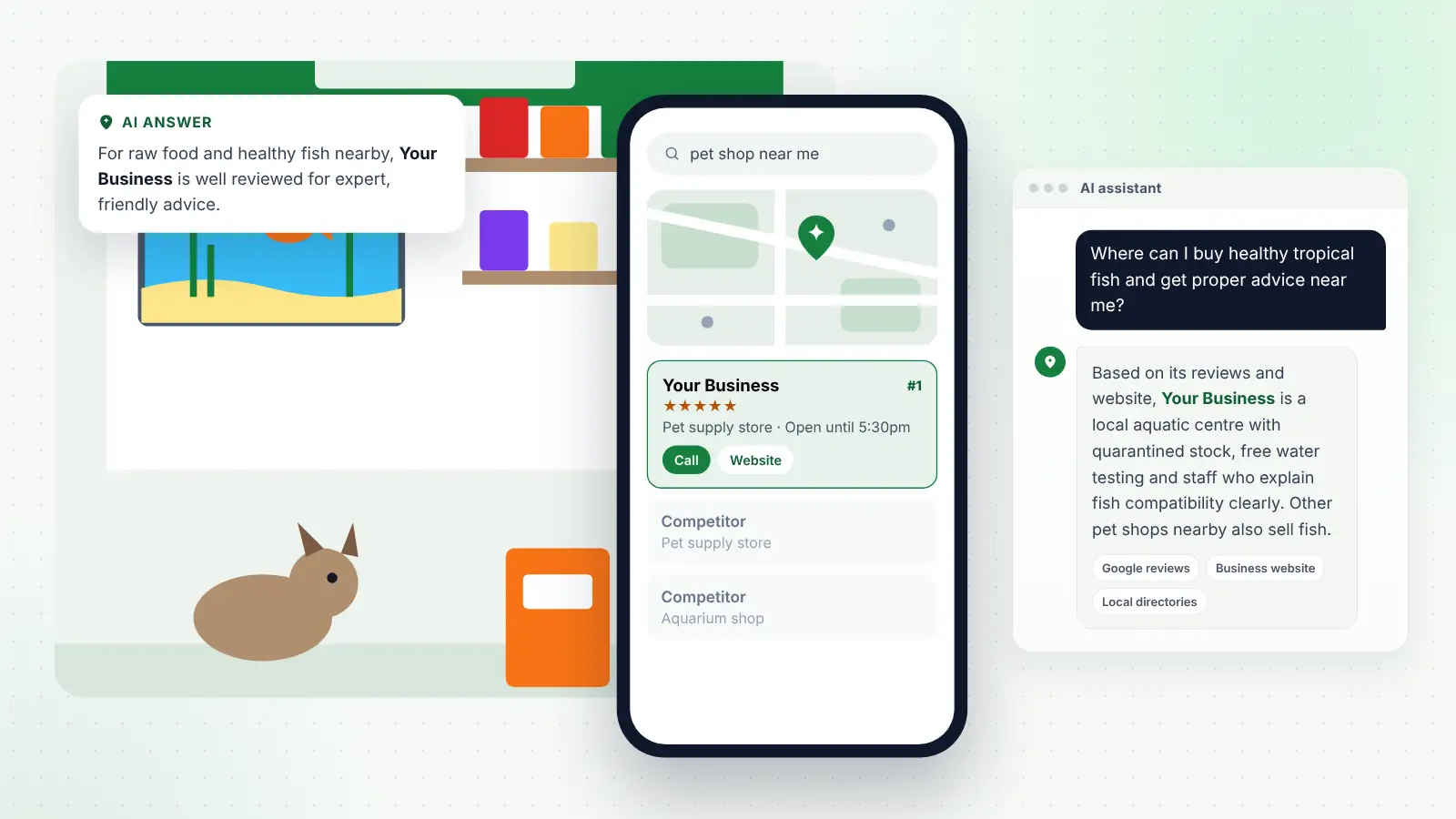
Most pet shop customers live within a short drive, and many search with an immediate need: a sick fish or a freezer out of raw food. Searches such as “pet shop near me”, “aquarium shop near me”, “raw dog food near me”, “reptile shop open now” and “koi for sale near me” are all local, and Google answers them with a map of nearby businesses.
The shops that appear at the top of that map are the ones most likely to get the visit, so local SEO is often the most direct way for an independent shop to win new customers.
Google Business Profile
Your Google Business Profile is the most important listing you have.
- Choose the most accurate primary category, such as pet supply store or aquarium shop, and add secondary categories that genuinely apply.
- Add products and services: raw food brands, livestock groups, livefood, water testing, delivery and maintenance services.
- Upload real photos of your tanks, shop floor and team, and post updates about new livestock and pond season stock.
- Mention your licence and memberships in your description where it fits naturally.
Show what you have in stock
“Do they have it?” is a big part of why people search. Through Google Merchant Center, UK retailers may be able to show in-store products on Google for free using free local listings. If your till or website can supply product data, it is worth exploring for food and equipment. For livestock, which changes too quickly for most feeds, regular posts and a “new arrivals” page do a similar job.
Reviews
Ask happy customers for reviews, especially after a successful set-up, and make it easy with a QR code at the till. Reviews that mention healthy fish, knowledgeable staff or reliable delivery are particularly helpful. Reply politely to all of them, including the occasional complaint about a fish loss.
Consistent details and local links
Make sure your business name, address, phone number and opening hours match everywhere: your website, Google, Bing, Apple Maps, Facebook, the OATA directory and hobby directories. Local links help too, from fishkeeping clubs, reptile societies, rescue charities, local news sites and community groups you support.
A website that answers questions
Your website should have clear pages for each main area of the business, such as raw food, tropical fish, pond supplies, reptiles and small animals, delivery and maintenance services, plus helpful guides like starting a first aquarium or switching a dog to raw. If you would rather have specialists handle this work, our local SEO for pet shops and aquatic centres is designed for exactly this kind of business.
AI search: how pet owners ask for recommendations
More people now ask AI assistants such as ChatGPT, Gemini, Perplexity, Copilot and Google’s AI Overviews for recommendations instead of scrolling through results. Pet owners tend to ask detailed questions, such as:
- “Where can I buy healthy tropical fish and get proper advice near me?”
- “Which pet shop near me sells frozen raw dog food?”
- “Is there a reptile shop nearby that stocks live locusts?”
- “Who can maintain an office aquarium in my area?”
These tools piece together an answer from what they can find, which usually means:
- Consistent information across your website, Google profile and directories.
- Reviews that describe what you are good at in specific terms.
- Clear service descriptions, such as which livestock you keep, which raw brands you stock and where you deliver.
- Useful FAQs that answer common questions in plain language.
- Mentions on reputable sites, such as trade association directories, local news and hobby club pages.
So write as if explaining your business to someone who has never visited. Name the species you specialise in, explain your quarantine or water testing routine and list your delivery area. The clearer the information, the easier it is for an AI assistant to recommend you. Like local SEO, AI visibility tends to build over three to six months rather than overnight.
Frequently asked questions
Do I need a licence if I only sell fish?
Usually, yes. In England, fish are covered by the selling animals as pets licence if you sell them in the course of a business. Some conditions apply differently to fish, but the licence itself is still required. Check with your council if you are unsure.
How can I improve my star rating?
Meet the higher standards in the official guidance where you can, keep thorough records and written procedures, and invest in staff training.
Can I sell raw pet food without registering?
Simple retail of pre-packed raw pet food is generally exempt from registration, but mixing, repacking under your own name or making your own products usually needs registration and may need approval. Talk to your local Trading Standards service before you change what you do.
How long does local SEO take for a pet shop?
A tidier profile and listings can bring more footfall within weeks. Higher map positions and AI recommendations usually take three to six months, depending on local competition and how consistently the work is done.
Final thoughts
An independent pet shop or aquatic centre grows by doing what online retailers struggle to do: healthy livestock, genuine expertise and convenient local service. Get licensing right, check new stock against the invasive species rules, handle raw food responsibly and make it easy for regulars to return.
Then make sure people can find you. A well-kept Google profile, clear pages, detailed reviews and consistent information help both search engines and AI assistants point pet owners to your door.